In the world of organ procurement, recovery is not simply about getting organs out of the OR. It is a structured, time-sensitive process that requires precise coordination, sterile technique, accurate documentation, proper preservation, and safe packaging from cross-clamp through transport. This guide is designed to help you master one of the most procedural and high-stakes areas of the CPTC exam: Organ Recovery & Preservation.
CPTC Exam Practice Questions: Organ Recovery & Preservation
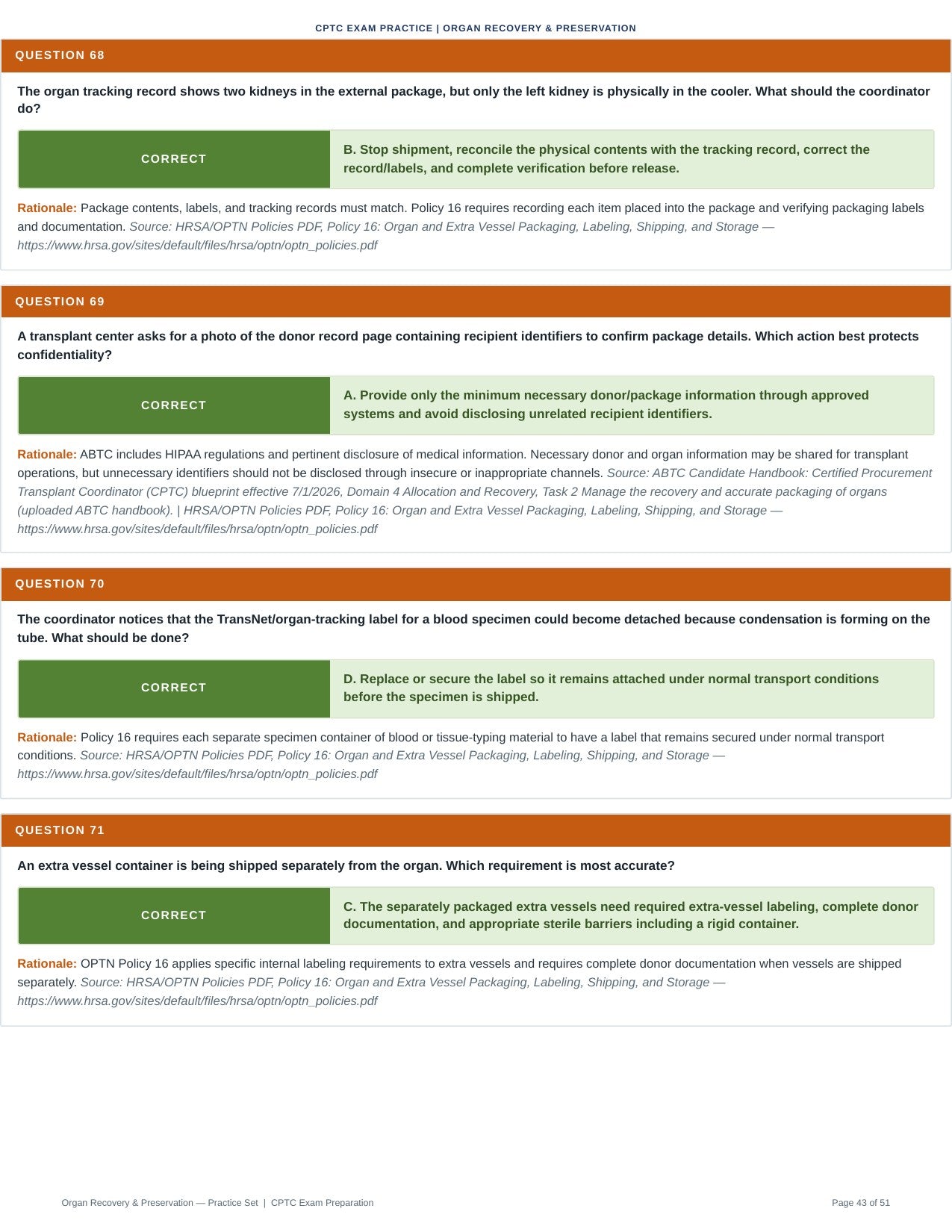
Allocation and Recovery accounts for 29% of the CPTC exam, making it one of the largest domains on the current ABTC blueprint. This 100-question set focuses specifically on the recovery and packaging responsibilities of the Organ Procurement Coordinator, including OR logistics, aseptic technique, cross-clamp timing, preservation solutions, TransNet documentation, organ packaging, labeling, and transport readiness.
This guide moves beyond memorization and helps candidates think like an Organ Procurement Coordinator: preparing for the donor OR, anticipating recovery-team needs, protecting organ quality, verifying required documentation, maintaining chain of custody, and recognizing what must be completed before an organ can safely leave the recovery site.
Why This Guide is Different
The CPTC exam does not just test whether you know that organs are recovered and packaged. It tests whether you understand how the recovery process is coordinated, what must be verified before moving forward, how sterile technique and preservation protect organ quality, and what the coordinator must do when documentation, labeling, timing, equipment, or team communication is incomplete.
Blueprint-Aligned: Built directly around the ABTC CPTC Allocation and Recovery domain, with focused practice on managing the recovery and accurate packaging of organs to ensure safe and effective utilization.
Policy-Driven Practice: Covers donor OR coordination, recovery huddles, DCD recovery requirements, death declaration separation of roles, cross-clamp timing, warm ischemic time, organ anatomy documentation, flush solution documentation, extra vessel packaging, internal and external labels, courier handoff, and OPTN/HRSA packaging requirements.
The “Exam Lens”: These questions are designed to help you recognize the safest, most policy-consistent answer—not just the most familiar one. You will practice spotting common traps such as incomplete donor identity verification, missing sterile barriers, incorrect label placement, unresolved ABO discrepancies, poor communication with accepting centers, or releasing an organ before required packaging and documentation steps are complete.
Accuracy: Every answer and rationale in this question set is source-checked against authoritative organ donation and transplant references, including HRSA/Organdonor.gov, the Revised Uniform Anatomical Gift Act, CDC/USPHS donor risk guidelines, American Academy of Neurology brain death guidance, and UNOS/OPTN policies.
What’s Inside
100 Full-Length CPTC Practice Questions: Scenario-based, multiple-choice questions modeled after the style and decision-making level of the real CPTC exam.
Detailed Rationales for Every Answer: Each question explains why the correct answer is right and why the other options are unsafe, incomplete, poorly coordinated, or not policy-based.
Organ Recovery & Preservation Focus Areas: Includes donor OR timing, team coordination, medical examiner restrictions, recovery surgeon credentials, DCD withdrawal workflow, death declaration requirements, cross-clamp documentation, warm ischemic time, sterile technique, preservation solutions, organ flush documentation, kidney rigid-container requirements, machine perfusion labeling, extra vessel packaging, TransNet documentation, courier handoff, chain of custody, and post-recovery notifications.
Source-Based Learning: Each rationale includes a source reference and external link so you can verify the answer and study directly from authoritative guidance.
Includes
100 Organ Recovery & Preservation CPTC Practice Questions with Detailed Rationales
Don’t just memorize organ recovery steps—learn how to apply them.
This download includes 100 scenario-based, multiple-choice CPTC practice questions focused on organ recovery, preservation, packaging, labeling, documentation, and transport. Each question includes a detailed rationale to help you understand the clinical, logistical, and regulatory reasoning behind the correct answer.
Exam Tip: When in doubt, choose the answer that verifies required information before moving forward, protects organ quality and recipient safety, preserves sterile technique and allocation integrity, communicates clearly with recovery and transplant teams, and follows current OPTN/HRSA policy.
This is not official ABTC content and does not reproduce ABTC questions. It is an independently written, evidence-based study product. For legal hierarchy questions, I used the Revised Uniform Anatomical Gift Act model hierarchy; actual OPO practice must still follow the applicable state law and OPO/hospital policy.