

CPTCexam
Donor Authorization & Brain Death - CPTC Exam Study Guide (2026 Edition)
Donor Authorization & Brain Death - CPTC Exam Study Guide (2026 Edition)
Couldn't load pickup availability
This guide is designed to help you master one of the most heavily tested areas of the CPTC exam: Donor Evaluation and Authorization — Brain Death and Consent. In the world of organ procurement, determining death and securing authorization are not simple yes-or-no steps. They are a structured, time-sensitive sequence of clinical and legal judgments that decide whether a patient is a valid donor at all — and whether the right person has given a valid gift — before a single organ can be offered, allocated, recovered, or transplanted.
CPTC Study Guide: Organ Authorization & Brain Death
Donor Evaluation and Authorization accounts for 27% of the CPTC exam, making it one of the most heavily tested areas on the current ABTC blueprint. This guide focuses specifically on the domain's two highest-stakes decisions: confirming a valid death by neurologic (brain death) or circulatory criteria, and securing valid authorization from the legally recognized decision-maker.
This guide moves beyond memorization and helps candidates think like an Organ Procurement Coordinator: verifying that a brain-death determination is complete, recognizing when authorization is legally binding, identifying the correct legal next of kin, and understanding what must be confirmed before donation moves forward.
Why This Guide is Different
The CPTC exam does not just test whether you know that brain death and consent exist. It tests whether you understand which conditions make a death valid, who is legally allowed to authorize, what information must be gathered, and what the coordinator must do when a family objects, a registration is found, or a determination is incomplete.
- Blueprint-Aligned: Built directly around the ABTC CPTC Donor Evaluation and Authorization domain, with focused teaching on brain-death determination and the authorization conversation.
- Policy-Driven Learning: Covers brain-death prerequisites and the 2023 determination guideline, brainstem reflex testing, apnea and ancillary testing, pediatric determination, DBD versus DCD, the dead donor rule, first-person authorization and donor registries, the legal next-of-kin hierarchy, the UDRAI, U.S. PHS risk criteria, NOTA and financial responsibility, and authorization scope and documentation.
- The "Exam Lens": This guide is designed to help you recognize the safest, most policy-consistent answer—not just the most familiar one. You will practice spotting common traps such as re-asking a registered donor's family for permission, accepting authorization from a lower-ranking relative, mistaking a coma or a spinal reflex for brain death, applying the adult single-exam pathway to a child, or treating a PHS risk factor as an automatic exclusion.
What's Inside
A Complete, Readable Study Guide: Full teaching sections written in plain language—not an outline—covering catastrophic brain injury, the determination of brain death, and the authorization process from the registry check to signed consent.
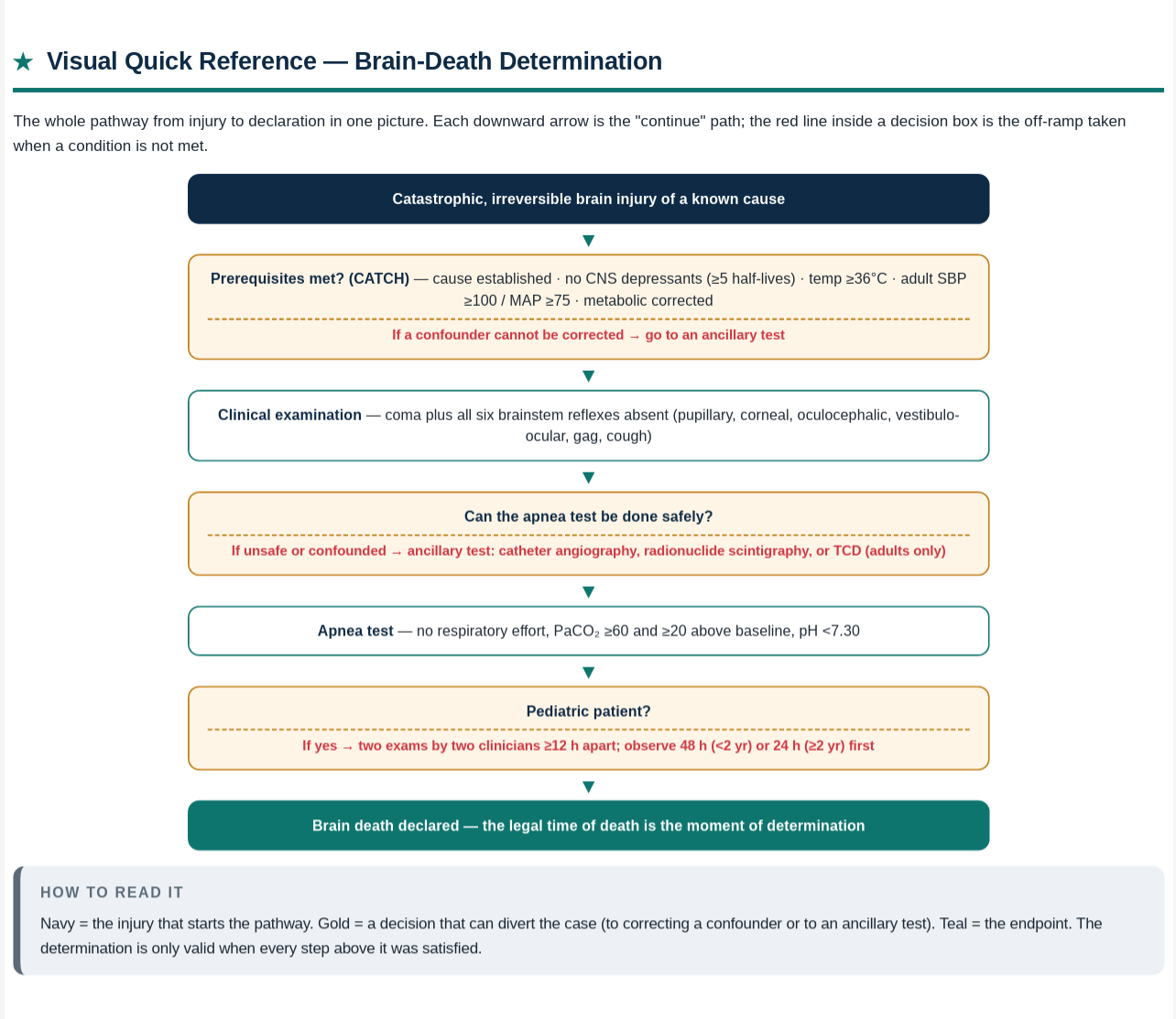
- Visual Quick Reference: A brain-death determination flowchart, an authorization decision tree, and a one-page "Numbers to Memorize" cheat sheet for fast, last-minute review.
- "Check Yourself" Self-Tests: Scenario questions with answers built into each section, so you confirm you can apply the material—not just recognize it.
- Mnemonics, Exam Alerts, and Master Checklists: Memory hooks and the classic traps flagged throughout, plus brain-death and authorization checklists to run before you commit to an answer.
- Source-Based Learning: Aligned to current national guidance so you study directly from authoritative standards.
- Companion Practice Set: Pairs with the 50-question Organ Authorization & Brain Death practice set for applied, scenario-based drilling.
Includes: The complete Organ Authorization & Brain Death CPTC Study Guide (Companion Edition), aligned with the 50-question practice set.
Don't just memorize brain-death and consent rules—learn how to apply them. This guide teaches the clinical, legal, and ethical reasoning behind each decision, so you walk into the exam able to work a scenario the way a coordinator works a real case.
Exam Tip: When in doubt, choose the answer that confirms a valid determination of death, honors the correct legal authority, protects recipient safety, and follows OPTN and UAGA policy before moving forward.
Trust Indicator
Every fact and rationale in this study guide is source-checked against authoritative organ donation and transplant references, including HRSA/Organdonor.gov, the Revised Uniform Anatomical Gift Act, CDC/USPHS donor risk guidelines, American Academy of Neurology brain death guidance, and UNOS/OPTN policies.
Disclaimer
This is not official ABTC content and does not reproduce ABTC questions. It is an independently written, evidence-based study product. For legal hierarchy questions, I used the Revised Uniform Anatomical Gift Act model hierarchy; actual OPO practice must still follow the applicable state law and OPO/hospital policy.
Share